.png)
India's first & foremost horse racing portal
 Register Now


CAN HORSE RACING EVER BECOME CRICKET?
By Mohit Lalvani | 17 Nov 2013 |
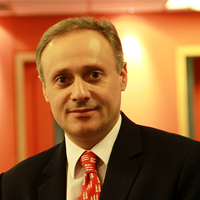
Mohit Lalvani
So Sachin Tendulkar has retired and true to form, his final stroke was one that has now been heard around the world like a gun shot. Sachin was India’s greatest import, a demi-God if not an entire and arguably the best batsman the world had seen since Sir Donald Bradman. Looking back to how it all happened begs the thought that it is mere mortals who create Gods who in turn make religions out of day to day processes.
Cricket in India became a religion after Sachin became a God and his cricket funeral was one that stopped a nation for three days even as the rest of the world took notice with a sense of bemused curiosity. Yes, when Michael Jordan, Wayne Gretsky and Pele retired, nations did come to a standstill but today, in a world dominated by connectivity, even in a country like Singapore, many stopped to see the magician cast his final spell. A spell that remarkably made us all believe that the game was only as big as Tendulkar. After all, how often does that happen in sport?
But for in Australia, there is no sports event that stops a nation like the Melbourne Cup does. The state of Victoria is officially shut on Melbourne Cup day as it is considered sacrilegious to make someone work when they should be at the races. For the Aussies they would rather see the Melbourne Cup than watch Sachin play his final innings and with this fact comes the realization that Tendulkar is not an anomaly.
The Epsom and Kentucky Derbys also did that once, even if unofficially and there was a time that the Indian Derby did it too. At one time, horse racing was the biggest spectator sport in the world but sadly today is an ‘also ran’ in the sport, lifestyle and entertainment space. Never was this more apparent to me than in June this year.
The first time that I ever went to England, it was 1977 and Lester Piggott drove home The Minstrel to beat Hot Grove by a head on the first Wednesday in June. As a child I was carried away by the frenzy, the media attention and the fact that England stopped to see her greatest rider win yet another Epsom Derby. Now in 2013, on a Saturday, sadly, I had to request the pub managers at South Audley to switch the TV set to horse racing from a game of darts that was going on somewhere in the North of England. Even once on, I was the only person watching England’s biggest horse race making me wonder how racing had gone so wrong and what we needed to do to make it like cricket is in India?
In India, we live on a handful of great race days but sadly the bulk of our calendar fails to draw crowds to the stands akin to what used to be the case at test matches in India. No one went and no one cared. That is, not until the BCCI figured out how to truly market the sport in its purist form. If ever there was a carefully strategized staging of a sporting event to create new highs in interest, viewership and resulting revenues, this latest test match was it. The planning was perfect and this crest is almost certainly going to be followed by yet another superbly crafted circus; an emergence in time of another God; and the perfectly crafted block to fill a void that has been created. Can this be done in horse racing? It’s obviously difficult but the answer is, ‘yes’ and for that we need to find our Gods first.
Horse racing in India has some major disadvantages. The most important being that while cricket is played in every home, street and in every child’s dreams, how does one fit a horse in a bedroom. Interaction with horses in India is restricted to a few. Even the privileged find that it’s too much of an effort to find an equine activity that they can walk to as they would for a game of building cricket. Infrastructure development is key here and is required to overcome the perception that it’s easier to fit a bat in a store room than it is to fit a thoroughbred. Our masters at Google Inc. have taught us that the laws of physics are meant to be manipulated for only then can you challenge these and find greater innovation. Centres of riding that make it possible for anyone to walk off the street and interact or learn to ride horses for the price of a Byculla Zoo ticket will go much further for the growth of the sport than an advertisement in a newspaper would. The masses in our cities will relish this opportunity and the fact that the private turf clubs would manage this would also ensure that the animals do not suffer from malnutrition and are fed to one another as they are in the Zoo.
Another way of involving the masses especially the aspirational middle income baby boomers is to broaden the scope of ownership. While syndicates were created to do more or less this, the scope was extremely limited. With syndicates hosting a maximum of twenty owners, it is still prohibitive to get the masses to participate in a race horse except through betting. Can we create systems where a call centre executive or bank officer can invest two hundred rupees upward a month on a horse and be given an opportunity to become an owner? The resultant benefit will be a broader involvement of a growing upwardly mobile segment and eventually sponsorships from bigger brands as well.
Most of our events are geared towards superb corporate hospitality and we often forget that in order for horse racing to become cricket, we need the buy-in of the masses. Most of the sponsors in our major racing centres promote high net worth products and while this has been critical for growth of stake money and VIP guests at the games, it shouldn’t be at the neglect of the lesser income fans who once made up the back bone of the horse racing. The non-membership enclosures need some serious revamping and better facilities. Facilities where the bank officer mentioned above is able to bring his family to the races as a 1/100th or even a 1/1000th owner in a horse should be a place where he should feel privileged and find a decent place to put his hat, buy some ice cream for his kids and not have to stand on top of someone else. Sounds a bit expensive, tedious and impractical to implement? Yes it does. But less so than it once was to go to the moon.
The road to making horse racing like cricket is going to be a long one if someone undertakes to do it. There will be more failures and detractors than successes or contributors. But even if it takes twenty years to do, it will be worth it and the custodians of the sport will truly leave behind a legacy. Like the BCCI created and marketed Sachin Tendulkar, so to do we need to make and market our stable of Gods. How is Sachin different from some of our best? Leaving aside the hype, not by much. Blasphemous as this may sound, we have very talented professionals who work as hard as the little master has and given the opportunity could demonstrate their mastery too. All that they need is the system to make them larger than life and once that is done, Indian horse racing will have found its Gods. People will come from all over India to pray and on the chance that the human Gods fail to find the inspiration needed to step up to the plate, we have something that cricket doesn’t. Our horses.
News Letter
Contact
Email: info@indiarace.com

- HOME
- STUD FARMS
- ARCHIVES
- GLOSSARY
- CLASSIFIEDS
- EX-NAME SEARCH
- DAM
- SIRE
- ROLL OF HONOURS
- FEEDBACK
- HORSE TALK


