.png)
India's first & foremost horse racing portal
 Register Now


THE INDIAN TURF INVITATION CUP
By Anil Mukhi | 06 Mar 2014 |
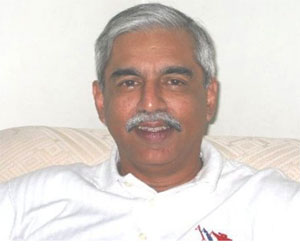
Mr Anil Mukhi
For the 800 million Indians aged 35 and below, there is scarcely an opportunity for their voices to be heard currently on the Indian Turf. Presently its administration consists almost exclusively of "old fogies" – and all men at that, and the disconnect is obvious.
What can be divined from social media is that youngsters are keen on "action" sports and therefore should normally be expected to be deeply involved with horse racing. After all, there are very few sports that lend themselves better to satisfying this need, accompanied by the opportunity to legally wager on the outcome, than fast-paced, quality horse racing. Unfortunately there is a steep learning curve to getting drawn in. And no one in authority seems to be looking down the road and wondering where the next generation of patrons is going to come from, and how their needs can best be served. The opportunity is there – who will seize it?
This is where young Tegbir Brar, partner in Dashmesh Stud and an avid racing and pedigree buff comes in. Mr. Brar, who has a serious stake in the sport, has started a blog, where he has taken up issues relating to the Indian Turf from a long term perspective. In his most recent piece, which can be accessed www.tegbirbrar.wordpress.com, he has suggested that the Invitation Cup weekend be converted to a full-fledged carnival somewhat like the Breeders' Cup. In this piece, I have put forward some ideas in this direction.
History
When the R.W.I.T.C. Ltd., R.C.T.C. and M.R.C. came together and introduced the Indian Turf Invitation Cup back in 1962/63, the situation on the Indian Turf was vastly different to that prevailing today. Foal crops were small, travelling an ordeal, sponsorship non-existent and television coverage and the internet not even a gleam in the distance. As the Indian Derby at that time did not draw too many out-station challengers, it was felt that a championship event over the Classic distance of 2400 metres would help to throw up the identity of the nation's finest Classic horse.
To share the honours of hosting such a race equitably, it was programmed to rotate annually between the three principal racing centres then conducting race meetings during the Winter, namely Bombay, Calcutta and Madras. While the second circuit was in progress, the Bangalore Turf Club Ltd. became a turf authority, and during the fourth, Hyderabad was added, bringing to five the number of centres at which the race has been run (with the recognition of the Mysore Race Club as the sixth turf authority, that centre might also see an Invitation weekend).
With the object of ensuring that the best representatives of the Classic crop from all over the country, which might otherwise not have met, were on hand, the Invitation Cup was framed literally so – as a race whose participants were invited by the individual turf authorities, without having to pay any entry fee. In addition, the sponsoring turf club bore out-of-pocket expenses like stabling, transport and travelling costs, and incidentals.
Sponsorship
From 1983, the race began to be sponsored, initially by Vazir Sultan Tobacco Co. Ltd. after whose best-known product, Charminar cigarettes, the event was named. The Charminar Challenge Indian Turf Invitation Cup gave way in 1989 to the Classic Indian Turf Invitation Cup, by which name it continued to be known till 1998. Thereafter, there were two runnings of the Wills Indian Turf Invitation Cup – in 1999 and 2000 – after which ITC Ltd. unexpectedly withdrew its sponsorship.
Some of the subsequent renewals have been sponsored while others – including the most recent one – have not. One may rightly regard the failure of the Turf Authorities of India to secure long-term sponsorship, of the kind enjoyed by the Indian Derby, as an inexcusable failure.
Changing circumstances
At the time it was framed, the race certainly fulfilled its objective. Back in 1963 when the South India challenger Mount Everest affirmed his superiority, few horses travelled from centre to centre. However, today this is commonplace for the cream of the crop. Nowadays, trainers such as Neil Darashah, Jaggi Dhariwal, the Ganapathys (father and son), S. Padmanabhan, Pesi Shroff and others have horseboxes buzzing with action while carrying the best of the Classic youngsters around the land.
What's more, the original premise on which the Invitation Cup was founded has become somewhat attenuated, with several out-station runners now participating in the Indian Derby. For the first time ever, the year 1996 saw all three placed runners at Mahalakshmi being from outstation. In 2004, Psychic Flame came over from Calcutta to put her stamp on the Blue Riband. Only the last-gasp effort of Velvet Rope was able to prevent an “outstation” clean sweep of the 2006 Indian Derby, followed home as he was by Holding Court, Mystical and Romantic Liaison. More recently, the likes of Diabolical, In The Spotlight and Super Storm have been victorious "shippers". The point is that the training location is no longer a bar to participation in the principal event on the Indian Turf.
Image crisis
In addition, the Supreme Court's favourable verdict in 1993 notwithstanding, Indian racing is desperately in need of an image make-over. Marketing and management efforts designed to improve the manner in which it is perceived by the public are vital. At present it is mistakenly viewed as being more akin to a shady gambling den rather than to a majestic outdoor sport involving charismatic equine athletes replete with glamour and thrills and spills. The abolition of bookmakers would be a welcome first step in any meaningful reform!
Anyway, the time is ripe for a drastic rehash of the Invitation Cup weekend. No doubt all may not agree with this premise. Yet the beneficial results that are foreseen may well outweigh any downside.
A dramatic change
The suggestion is therefore mooted that the Indian Turf Invitation Cup ought to be the centerpiece of an Indian racing carnival on the lines of the Breeders Cup or Royal Ascot.
This "super weekend" would showcase the Indian Thoroughbred industry to the nation and even internationally.
Even now there are valuable supporting events during the Invitation weekend. For example, in March 1979, some 16 years after the first running of the Indian Turf Invitation Cup, a sprint race (with penalties) called the Sprinters Cup for short runners was added to the weekend's programme. Two years later i.e. in March 1981, a long distance race (with penalties) called the Stayers Cup for stamina-oriented runners was introduced. A metric mile clash – the Super Mile – followed in 1983, while an intermediate event over 2000m. – the Vintage Cup (later run as the Japan Cup) – was added in 1991, though this last-named has since been scrapped.
However, these have been added piece-meal, without any overall grand design in view. The idea, then, is to rationalize what has come up by incremental methods into a properly planned annual rotating racing carnival in March each year.
Also the supporting card currently leaves much to be desired. Throwing a million rupees into the jaws of untalented runners does not make them talented! It's shocking to have restricted races (e.g. 5 year-old and over) on an Invitation weekend. Just as heinous a crime is allowing mediocre horses, rated as low as 31 (Musk Melon) or 34 (City Of Dreams), to earn the prestige of winning a "Million", an accolade which will work its way in due course into pedigrees in catalogues and lead future generations to make erroneous assessments of merit.
Foreign equivalents
There are several international racing carnivals in different countries. Some of these are traditional, some a recent innovation, while there are also hybrids involving a mixture of tradition and experimentation.
England's version of a carnival is the Royal Ascot meeting. This five-day show in mid-June (increased in 2003 from the traditional four days) sees six races programmed each day, and is the highlight of the annual Racing Calendar in that country. All the best horses in training turn out for it. France, too, has its own version in the first week of October, centred around Europe's richest race, the Prix de l'Arc de Triomphe. This is a weekend show, much like the existing Invitation Cup weekend in India.
North America has what started as a one-day racing carnival, run in October/ November, namely the Breeders Cup, the venue for which rotates annually. From 2007, this became a two-day festival. There are separate events for juveniles, females, classic horses and older runners at all these carnivals.
The proposed programme
A tentative Indian equivalent has been drawn up and is presented below:
TABLE I: RACES TO BE RUN AT THE PROPOSED INDIAN RACING CARNIVAL
| Name of Race | Distance | Grade | Age | Conditions & Penalties |
| Day 1: Saturday | ||||
| A RACE # 1 | 1400 | - | 4+ | Fillies & mares; non-winners of more than 3 races or of a Graded race |
| SURESH MAHINDRA MILLION | 1400 | 3 | 4+ | Terms, winners of at least 3 races, Graded winners not eligible |
| SPRINTERS CUP | 1200 | 1 | 4+ | None |
| A RACE # 3 | 1000 | 1 | 4+ | Unraced colts and geldings |
| STAYERS CUP | 2800 | 1 | 4+ | None |
| BREEDERS MILLION | 1400 | 1 | 3 | None |
| A RACE # 4 | 2000 | - | 4+ | Terms, winners only, Graded/Million winners & placed not eligible |
| A RACE # 5 | 1800 | - | 3+ | Offspring of sires that had won at > 1600 metres |
| Day 2: Sunday | ||||
| A RACE # 6 | 1000 | - | 3&4 | Terms; winners only, Graded/Million winners & placed not eligible |
| A RACE # 7 | 1600 | - | 4+ | Colts & geldings; non-winners of more than 3 races or of a Graded race |
| SUPER MILE | 1600 | 1 | 4+ | None |
| A RACE # 8 | 1200 | - | 3 | Unraced fillies |
| JAPAN DISTAFF CUP | 2000 | 2 | 4+ | Fillies & mares; winner of a Gr.3: 3 kg.; of a Gr.2: 5 kg.; no Gr.1 winners |
| INVITATION CUP | 2400 | 1 | 4+ | None |
| A RACE # 9 | 2400 | - | 4+ | Terms: earners of less than Rs.500,000 not eligible |
| A RACE # 10 | 1200 | - | 3 | Terms: earners of less than Rs.400,000; winner - 5 kg. |
Rationale for suggestions
1. To truly make it a carnival, top three-year-olds must be seen in action. This would involve shifting the Breeders Million (sponsored at present by the Poonawalla Group) to this weekend and making it a rotating event.
2. Framing a race each for hitherto unraced three-year-old colts/geldings and fillies (there are plenty of these to ensure well-filled fields). The "unraced" condition is to inhibit those who would give "runs" in maiden races just to get their wards fit.
3. Framing a conditions race for lesser three-year-olds (the ones not good enough to participate in the Million – hence the restrictive condition: earners of > Rs.4,00,000 not eligible).
4. This will make for four events exclusively for three-year-olds, all of which should attract a good number of runners with 1,800+ members of this crop in training.
5. Framing conditions races each for four-year-old colts/geldings and fillies below the top (non-winners of Graded Races – there are plenty of these around).
6. Retaining the Sprinters Cup "as is".
7. Retaining the Super Mile "as is”.
8. Programming only one 3,000 m. event in the whole year is meaningless – the Stayers Cup should be shortened to 2800 m. and made the final leg of a cogent “staying” schedule, with carefully scheduled lead-up races at all centres, such as the Byculla Club Cup at Mahalakshmi, the Queen Elizabeth II Cup at Kolkata, etc.
9. Carding two terms races for lesser horses (Graded Stakes winners/placed horses and “Million” winners/placed horses not eligible), one each over 1000m. and 2000m. Of these, the 1,000 m. sprint (hence no clash with the Invitation Cup) would be for three and four-year-olds only. The other would be open to four-year-olds and over. A specific condition for entry for these two races would be that each horse entered must have either one win or two places or three on-the-board finishes in its last three starts, thus reducing runners that had been running foul.
10. Converting what was the Japan Cup into a Grade 2 race for fillies and mares only – the Japan Distaff Cup – with Grade 1 winners not permitted to run, thus directing such horses towards the Invitation Cup. Breeders would in all likelihood steer their trainers into running in such an event in an attempt to gain Graded Race honours before retiring to stud.
11. Running the Suresh Mahindra Multi-Million Trophy as a 1400 m. for decent older horses (winners of at least 3 races, that had not won previously at Graded Stakes level).
Incentives for professionals
Two other innovations that would add spice:
1. A trainer's championship – 10 points for each win, 4 points for each 2nd place, 2 points for each third place, and 1 point for each fourth place runner. About Rs.10 lakhs should be set aside for this, which will be the single largest incentive for a trainer to enter runners in several of the races. The prize money can be divided into 3 prizes, Rs.7,00,000 for the winner, Rs.2,00,000 for the runner-up and Rs.1,00,000 for the third.
2. A rider's championship along similar lines – with additional "appearance money" for visiting riders (which could be defined as riders who have not had 5 or more mounts anywhere in India since November 1st of the previous year). This should encourage Dubai-based international class riders and perhaps others further afield to make the trip even of their own volition.
Conclusion
The above plan should be able to attract:
1. Not less than 8 runners in each race, going up to 20 runners in big open-betting races.
2. All the country's best horses, with ample opportunity for a long rest after the event.
3. In due course, foreign runners invited from neighbouring countries.
4. Foreign professionals and media coverage.
5. Full-scale television and internet coverage and advertising.
6. Unprecedented turnover and enthusiasm.
The potential for generating professional and financial rewards is immense – all that remains is to tap it!
News Letter
Contact
Email: info@indiarace.com

- HOME
- STUD FARMS
- ARCHIVES
- GLOSSARY
- CLASSIFIEDS
- EX-NAME SEARCH
- DAM
- SIRE
- ROLL OF HONOURS
- FEEDBACK
- HORSE TALK


