.png)
India's first & foremost horse racing portal
 Register Now


INTEGRATING THE INDIAN TURF WITH THE WORLD
By Anil Mukhi | 14 Dec 2015 |
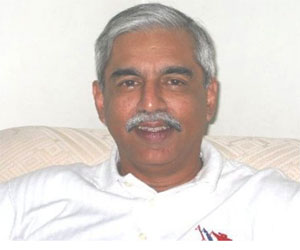
Anil Mukhi
Due to the importance of the horse in agriculture, transport and war, India has had a connection with the equine breed lasting thousands of years, an association said to have started around 1600 B.C. By the last quarter of the second millennium A.D., the country could boast of having achieved a certain degree of quality horse husbandry due to the advent of accomplished horsemen, skilled craftsmen (for tasks such as the stitching of saddlery and other tack items) and abundant grain and fodder in the warm tropical climate.
At some time during this period, public interest turned towards leisure aspects of the horse – riding, polo, and racing. There are records of organised horse racing in India from the 18th century onwards – the foundations of racing at Madras, as it then was, were laid as far back as 1780. No doubt, it was the British presence in India that catalyzed this development.
Racecourses began to be set up in cities and towns, more often in those urban conglomerations that had cantonment areas, where the British armed forces had a presence. At one time, it is estimated that there were as many as a hundred tracks across the length and breadth of the country – a number that is now down to nine, though there are advanced plans for a new addition in the Punjab.
The stock used for racing was a diverse mix of "country-breds", English and Australasian Thoroughbreds and Arabs. Capt. Horace Hayes, who gained renown through his seminal works "Veterinary Notes for Horse Owners" and "Points of the Horse", was also the author of "Indian Racing Reminiscences", published in 1883. This volume is a fascinating compendium of anecdotes of trials, coups and the like!
From the early 20th century, small numbers of Thoroughbred horses began to be bred at farms, particularly in North India, as an offshoot of breeding programmes for cavalry horses. Organised Thoroughbred breeding for racing however began in the 1930s, using foundation stock sourced mainly from England and Ireland, with a significant representation for horses hailing from Australia and New Zealand. Other breeding countries were represented in much smaller numbers.
There were no restrictions on import or export and well-known names like Dark Legend, third in the Derby of 1917 in England, as also Fastnet, winner of the Prix Greffulhe and Prix Noailles in France, came out to India and returned to Europe to stand at stud where they made significant contributions to the breed. No less important was the role played by Bunworry, who was shipped to India as a three-year-old, before returning to Europe a couple of years later to found a dynasty in Italy that held sway for decades. It's a matter of record that the General Stud Book noted the export of as many as 204 head to India alone in 1924 vs. only 135 to the United States or 81 to Australasia in the same period!
Similarly, when there was an existential threat to Indian racing from prudish politicians around 1950, breeders were able to return valuable breeding stock to England. A few racehorses were shipped out too but Her Majesty most regrettably died en route and the only Indian-bred racehorse of the 20th century to have raced in England after shining at the highest level on the track in India was Balam, who was sent there in 1951. Nothing can be deduced about his ability from a solitary start at the age of 6, where he was unplaced.
Another aspect of the Indian association with world horse racing needs mentioning: with quality racing in the cold-weather months in locales like Hong Kong, Singapore and the UAE not even a dream a century ago, most leading riders in England and Ireland chose to spend working holidays in India. They brought with them a wealth of expertise, which also had beneficial side effects in improving the standards of training and race riding in the sub-continent.
Collectively these facts demonstrate that a firm foundation for the integration of the sport in India into the world circuit had already been laid in the first half of the last century.
It all began to go wrong with Partition of the country in 1947, which was closely followed by a proposed ban on wagering. These twin developments had the effect of halving the foal crop from 328 in 1947 to a mere 118 in 1950. It took 21 long years for the crop to recover to its 1947 level and another 19 for it to top the 1,000 mark for the first time. At present, annual Thoroughbred production in India hovers around 1,400 head.
In 1958, a foreign exchange crisis saw the introduction of import licensing, which arbitrarily restricted both the number of horses that could be imported – whether for racing or breeding – as also their value. Within a couple of years or so, the vector that carries African Horse Sickness drifted across the country's North-Western border, resulting in the loss of a few hundred equines. Despite there having been no cases of this disease since 1965 (fifty years!), and despite the OIE declaring India to be free of A.H.S. in 2014, the European Union still does not permit import of horses from India – and not even their transit.
In 1977, at the time of the arrival of Contagious Equine Metritis in Europe and North America, a complete ban on imports of equines into India was introduced, which was later relaxed – but ironically only for breeding stock. (Incidentally, C.E.M. never entered India). And despite commitments to the W.T.O., import licensing still continues to this day, justified on the grounds that studies need to be conducted on "exotic germplasm", a red herring if there ever was one!
As a result there have been virtually no imported horses racing in India since the 105-rated Howells (renamed Certainty) carried the Poonawalla colours in the 1977-78 season. One can well imagine the detrimental effect such a four-decades-long vacuum has had both on the standard of the sport and breeding. As has been proven, the public pays to see top performers – take away a major stream of worthwhile competition and general interest (and consequently attendance, racing turnover, stake money and prices for bloodstock) will remain depressed. Can one imagine Premier League Football being what it is had it been restricted to English-born players? Likewise would the IPL have any popularity without the opportunity to view the world's best cricketers?
Horses imported specifically for racing – by virtue of performing on Indian tracks – would have provided Indian breeders with sound stock for retirement to the breeding shed in due course. Finally, in view of cost advantages a lively trade would have been possible for rearing/pre-training of imported weanlings/yearlings for racing or re-export. Pin-hooking is an important component of the global trade in Thoroughbred horseflesh.
With great difficulty, a handful of Indian racehorses have had the opportunity to participate internationally. Mainly these have been older individuals past their prime. Even so, the likes of Saddle Up (in Malaysia, Singapore and Hong Kong), and Mystical (U.A.E.) have shown that they measure up to the standards of decent international performers – both achieved Timeform ratings of 117. Arguably, at their prime they might have warranted ratings in the low 120s.
With the ups and downs in the world economy, India is one of the shining spots with a reported 7% growth rate in 2015 and a youthful demographic profile, one that is eager for entertainment opportunities. It contains a cohort that is capable of campaigning racehorses internationally, as for example one of the country's leading breeders Dr. Cyrus Poonawalla has done with the game Gordon Lord Byron – coincidentally sporting the same silks as the afore-mentioned Certainty.
The question is – in its own self-interest, will the Indian and international breeding and racing communities join hands and do their bit to assist in the removal of:
- the shackles that fetter Indian-bred racehorses from participation in some countries, by arranging risk assessments, etc., in foreign jurisdictions?
- the restrictions that prevent market expansion for weanlings/yearlings and performed racehorses into India, by filing appropriate trade-related proceedings?
Should this happen, it would be a win-win situation for all! The 36th Asian Racing Conference is being held on our shores in January 2016 – let's use the occasion for networking to resolve this burning issue….
News Letter
Contact
Email: info@indiarace.com

- HOME
- STUD FARMS
- ARCHIVES
- GLOSSARY
- CLASSIFIEDS
- EX-NAME SEARCH
- DAM
- SIRE
- ROLL OF HONOURS
- FEEDBACK
- HORSE TALK


