.png)
India's first & foremost horse racing portal
 Register Now


N.N. REDDY – DOYEN AMONG RACING ADMINISTRATORS
By R. Sanjay Reddy and Jamshed Sethna | 02 Feb 2022 |
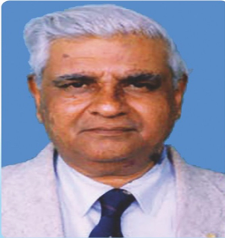
January 2022 has been a cruel month for Indian racing. Early in the new year we lost leading bloodstock agent and racing analyst Anil Mukhi and barely twenty four hours after the sad demise of legendary trainer Rashid Byramji on 29 January, came the news that Mr. N. N. Reddy, former secretary of Hyderabad race Club and a stalwart of Indian racing, had passed away.
N.N. Reddy, Nari to his friends, was arguably India’s finest racing administrator whose influence on racing was felt beyond our country’s borders.
Returning from the UK in the late fifties, N.N. Reddy joined the RCTC as a junior official, rising to the position of Stipendiary Steward and Handicapper before joining Hyderabad Race Club as its secretary in June of 1972.By the time he retired twenty one years later N.N. Reddy had transformed HRC into the most innovative and progressive race club in the country.
With his able guidance HRC became the fifth independent Turf Authority in India in 1977 and from a single monsoon racing season added a new season in the winter of 1979-80. In 1983 HRC introduced corporate sponsorship for racing, the first ever by an Indian race club, when VST Industries agreed a five year deal to sponsor the Indian Turf Invitation Cup starting with that year’s Invitation Cup at Hyderabad. The Charminar Challenge Indian Turf Invitation Cup was the forerunner of all racing sponsorship in the country and as B.P. Singh, head of the Tobacco Division of VST remarked later, the deal was concluded in just one afternoon after a meeting between himself and N.N. Reddy.
As an administrator the integrity of racing was of paramount importance to N.N. Reddy. He was keen to make racing much fairer, cleaner and less prone to misuse by unscrupulous owners and trainers who sought to exploit the system of classification of horses, that had been in use since colonial times with little change, for theirown selfish purposes. It had become common practice for such owners to bring a horse down two or even three classes at one racing centre before landing a coup at a different centre by taking on inferior horses. In 1989 N.N. Reddy introduced the rating system for all horses at HRC. His basis for this was a simple one – once a horse showed its true ability its rating at that point would be its true level and this would not change very much throughout its racing career.The consequences of this change was that racing in Hyderabad became much more competitive which led to an increase in betting turnover and better revenues for the club. This in turn meant increased prize money benefitting both professionals and owners. While he refused to be brow beaten by trainers, owners and officials of other race clubs who were slow to understand this new system and were clamouring for a return to old ways, N.N. Reddy was no autocrat believing himself infallible. The rating system was tweaked and adjusted until it was deemed to be working well. In a few short years the rest of the race clubs, barring one obvious outlier, had followed suit and changed to over to rating their horses rather than classifying them. Another major achievement during N.N. Reddy’s time at HRC was convincing the then state government to lower betting taxes on the tote. This boosted the club’s income and set HRC on its way to financial stability.
Post retirement in 1993 N.N. Reddy was appointed Secretary General of the Asian Racing Federation in advance of the 1995 Asian Racing Conference which was jointly hosted by Hyderabad Race Club and Royal Western India Turf Club. His stature as an administrator was such that even in retirement N.N. Reddy was the unanimous choice by the two host clubs to anchor this prestigious event. Not only was the conference a resounding success but the paper on the benefits of reduced betting taxation presented by N.N. Reddy was so well received that the Australian delegation used it in their successful submission to their federal government for the lowering of betting tax in that country. A rare instance of an Indian making a mark on the international horse racing stage.
Nari Reddy’s final, and what he believed to be his most important, contribution to Indian racing was as the Founding Director of the Indian Racing Academy set up by the Turf Authorities of India to train officials for the various race clubs. He held this post from 1996 to 2008 before finally calling it a day.Graduates of this academy currently hold senior positions in different race clubs in India.
His formidable intellect and deep knowledge of all aspects of racing provided him the foundation to defend his grandest ideas and more than hold his own against those opposed to these ideas.A qualified engineer who devoted his life to the betterment of racing not just in Hyderabad but across the country, N.N. Reddy’s passing leaves a void that will be difficult to fill.
Sanjay Reddy
Where does one begin to write about a man of the towering stature of Mr. N. N. Reddy? And, moreover, where does one end? I say towering because he was possibly the greatest administrator and transformative leader in Indian Racing as well as being among an infinitesimally tiny handful of people whose opinions were sought and respected internationally. I had the privilege of knowing him over the two year period that I spend as his student in the Racing Academy of India that he started at the Hyderabad Turf Club to train and teach candidates selected from the turf authorities about Racing Control so that they may be equipped with the knowledge to work as racing officials. I had been sent from the R. W. I. T. C. While we had the relationship of student and mentor, I have no qualms in saying that I held the lucky, if a bit heavy, position of being his favourite in that batch (the first one) of the Racing Academy. The academy was his most ambitious and, in his opinion, most important, project. We got along very well, indeed, and he would often take me home after the day’s work to have dinner with him and his wife, and we would talk endlessly about, what else, racing!
It is impossible to write about Mr. Reddy and not write about racing. He lived for the sport of horse racing, but in a very different way from most of the other legends in the industry. He was desperate to save Indian Racing from itself, desperate to show the racing fraternity how it could be done, and desperate to train and empower people to run clean and fair racing. It almost seemed like something he urgently needed to do before he hung up his boots. He was a fervent advocator and ambassador for the sport. He would be mortified by the state of Indian Racing today, but that is an obituary for another time.
He knew for a certainty that without professional control of racing the industry was doomed and was extremely concerned about the frightening shortage of trained officials to run racing in India. He foresaw a time where even if the powers that be in Indian Racing were to agree wholeheartedly to leave the control of racing to the professionals, there would be no locally available professionals who could be trusted to or have the requisite training and ability to do the job. That time is now. The Racing Academy was his answer to this problem. It was an absolutely amazing effort. His vision was tremendous. From the history of racing and the birth and evolution of the thoroughbred horse; the keeping of the stud book, the art of handicapping and it’s evolution and different methods, breeding, equine veterinary problems, totalisators, bookmakers, scores of famous cases of blackguardly behaviour in the annals of horse racing, here and around the world, there is nothing in racing that he didn’t touch upon. His reading and ability to interpret the rules of racing and to arrive at logical and, most importantly, fair, correct and objective judgements based on the facts of the matter at hand was nothing short of brilliant, almost poetic, verging on legerdemain. He was like an impresario, the different moving parts in racing was his orchestra. The length and breadth of his personality was enormous, and though racing was his first love, he was equally passionate when discussing Shakespeare or Beethoven or Bach or the intricacies involved in the making of Baccarat crystal ware. His knowledge was encyclopaedic and his interests ran from the sublime to the ridiculous. He lived with a flourish, with good humour and a sense of fun and adventure, and was almost flamboyantly dictatorial where racing matters were concerned, winning most of his battles on the turf with his favourite weapon of choice: knowledge. While he didn’t suffer fools gladly, he was never unfair or heedless of a man’s pride and was able to accept having made an error in judgement, a rare occurrence, with great humility.
He was one of the most remarkable and charismatic men I ever knew, a thorough gentleman and a visionary. What set him apart from other people who are also good at what they do is that you got a strong sense that his motives, even when he appeared to be ruthless or harsh, were far more elevated than the ones that drive most other people. He wanted what was best for racing, not what was best for himself, nor for any one person, or for his club, but for racing as a whole, the right and fair judgement was paramount. And in an industry where the single most damaging and prevalent affliction is false prestige, that is a truly marvellous thing. Nari Reddy was a truly marvellous man. He commanded respect. With his passing an illustrious chapter in Indian Racing has ended, and all of us who knew him are the poorer for it. Indian Racing certainly is.
Jamshed Sethna
News Letter
Contact
Email: info@indiarace.com

- HOME
- STUD FARMS
- ARCHIVES
- GLOSSARY
- CLASSIFIEDS
- EX-NAME SEARCH
- DAM
- SIRE
- ROLL OF HONOURS
- FEEDBACK
- HORSE TALK


