.png)
India's first & foremost horse racing portal
 Register Now


HORSE BREEDING IN MYSORE STATE
By Written And Illustrated By Lynfield | 18 Jul 2024 |
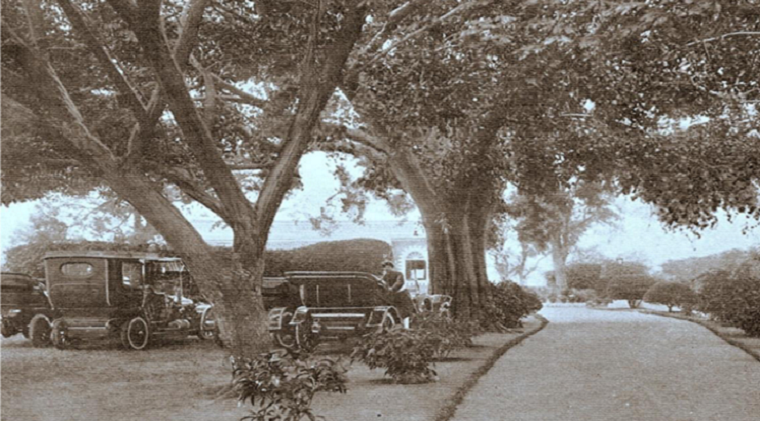
His Highness the Maharajah of Mysore has always had a great fondness for horses of all classes, but, while devoting much money to the rearing of the racehorses, he also kept in view the needs of the State. Though for many years it was thought that horse breeding would not be successful in the Mysore, His Highness determined on the experiment, with the result that a farm was commenced at Kunigal, a small town in the south east of the State, where a good supply of water and adequate Government land were available. The present officer in charge is Lieut- Colonel Jones, I.S.C., under whose superintendence the farm has made great progress, and it is quite safe to say that no other farm in India, run on the same lines, has been more successful or has a great prospect before it.
A visitor to the farm is at once struck with the extreme cleanliness and order that pervades the place. At the entrance to the farm the grounds are prettily laid out, the tress are neatly trimmed, and the graveled paths give one the suggestion of some great man’s drive at home. For his own convenience, and that of the visitors, a spacious bungalow has been erected in a picturesque position. As one enters the farm proper, the somewhat unusual feature for an Indian landscape, a number of hayricks, can be seen, while on all sides the meadows of rich green grass and Lucerne may be seen growing in rich profusion. Perhaps the fact that one so seldom comes across a sight like this in India causes the visitor to be impressed.
The history of the farm is not unchequered, for at one time it was felt that no purpose was being served by it, as better horses could be obtained from Australia at a cheaper rate, and it was explicitly stated by the Prime Minister of the State that the expenditure must be reduced or sufficient stock of good quality of remount purposes should be raised. Given a chance, the officer was convinced the farm would justify itself. A careful investigation of the conditions governing foaling was made, and by methods Colonel Jones had carefully studied, the foaling percentage jumped up from 35 to 80 per cent. Though improvements with regard to numbers had been made, it was felt that, for the purpose of breeding a high class stock, a number of good stallions and mares should be introduced. High Class animals, well shaped and thoroughly suitable for breeding purposes, were introduced with the result that the farm now produces animals which compare favourably with the stud farms in any other part of India. Of the mares thus introduced, the finest are Fearnought, Aureoline, Psalm, a daughter of Poem, by St. Simon, all first class animals. The Stallions recently introduced are of especially fine class; Courage, a thoroughbred horse, was purchased from Australia and was the champion sire of the thoroughbreds as the famous Sydney Horse Show. He cost nearly a thousand pounds. From the new importations have some excellent stock, some having been very successful in Indian Races. Cowslip is a winner of many races, Sir Simon annexed the Governor of Madras cup two years ago, and Valiant has great possibilities before him. Another stallion, Sugar Apple, is an English thoroughbred who is related to the mighty Persimmon; Gallant, a valuable Arab, has won many races and is now reserved for breeding purposes. The latest addition is Munderah, who cost the Maharajah £3,000. Only those mares which have proved their capacity to keep in condition under local conditions are to be kept on the farm. These mares are divided into six classes:- (1) Commoner, i.e., walers without pedigree; (2) those with Arab sires; (3) those with thoroughbred sires and Arab grandsires; (4) those with two thoroughbred top crosses (i.e., Arab great–grandsires); (5) those with Arab great-great-grandsires; (6) thoroughbreds. A system of nomenclature has been adopted by which the first syllable of the mare’s name contains its sire and the second its dam. Every month the animals are weighed, and the weights registered in the farm books. It is not an easy matter to solve the problem of the food supply, as expenses have to be kept within certain limits and a local supply is not always available. The Lucerne Garden is divided into twenty-five divisions, each capable of supplying one day’s required amount. AS the growth of Lucerne is quick, there is usually a good and regular supply. In the time of the monsoon there is generally sufficient grass to be obtained from the paddocks, while the large area of land under cultivation provides a quantity of hay, which is stacked in quite English fashion.
In addition to the paddocks there is an enclosed course of some three quarters of a mile in length. No pains are spared to attend to any approach of disease, and the first signs of catarrhal affections are noted and steps taken to segregate from the rest of the stock. All syces are liable to a fine if they neglect to report any suspicious symptoms in a horse, and this, with the close personal supervision of the officer, has had an excellent effect in preventing epidemic.
Some years ago the farm was visited by the Hon. Colonel Donald Robertson, the Resident of Mysore, who had always from the inauguration of the farm shown a great interest in its welfare. In connection with his observations he said: “It has been customary, and not without some reason, to regard Kunigal as producing, doubtless, some speedy racers, but for the most part ‘jumped–up’ colts and fillies with legs like pipe stems, not up to weight, and only relived from failure from cavalry work by constitutional hardness derived from the blood of their sires. Moreover, it has been frequently asserted that there could be no improvement with a stud in that locality. I do not think anyone visiting Kunigal at the present time could honestly say that this reproach now attaches to that institution. Weedy produces with an inefficiency of bone is practically a thing of the past,, and I say without hesitation that the farm is now turning out stock quite suitable for native cavalry. It is not, moreover, unsafe to prophesy that even better results may be looked for within the next three years.” The forecast of the Resident has been more than justified, and the farm of His Highness the Maharajah of Mysore is one worthy of the State. His Highness is fortunate in his officers, but it is largely his own personal enthusiasm and interest that has made the farm such a success. He enters for the chief races, and has much success in them.
Courtesy - The Illustrated Sporting And Dramatic News - July 13, 1912
News Letter
Contact
Email: info@indiarace.com

- HOME
- STUD FARMS
- ARCHIVES
- GLOSSARY
- CLASSIFIEDS
- EX-NAME SEARCH
- DAM
- SIRE
- ROLL OF HONOURS
- FEEDBACK
- HORSE TALK


