.png)
India's first & foremost horse racing portal
 Register Now


RED RUFUS
By Major Srinivas Nargolkar [Retd.] | 06 Jan 2026 |
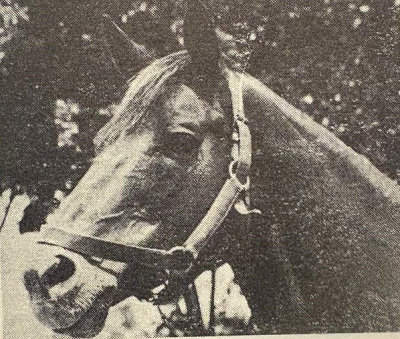
Red Rufus
RED RUFUS, ch c 1962
(Jan 16) (Second Foal)
Bred by H H The Maharaja of Kolhapur
Bred at Kolhapur Stud, Kolhapur, Maharashtra
Dosage Profile: 2-0-2-6-0 Dosage Index: 0.43

Red Rufus is the earliest born Indian Derby winner. A strong, sturdy chestnut, he was a horse easy to handle. In his races, he used to start a bit sluggishly but then warm up gradually. He had an excellent finishing burst. In his pedigree, you find the influential half-brothers Chaucer and Swynford on the opposite sides of the pedigree. He was also inbred 4x4 to Swynford and The Tetrarch.
His dam Red Belle was a winner of three races. At Kolhapur Stud, she produced just four foals and Red Rufus was her only colt. A year after Red Rufus, she produced Panchganga (by Cornish Flame) who had won three races consecutively but broke down just before the Indian 1000 Guineas. Rashid Byramji always rated Panchganga as one of the best fillies he trained. Unfortunately, Panchganga and her half-sisters Surangi and Jai Bhawani failed to keep the line ticking. A good filly is very essential for the propagation of a family and such a filly the three sisters failed to produce.
Redbay, Red Belle's sire, a winner in Ireland, was a fine racehorse. He had placed third in the 1945 Irish Derby to Piccadilly (Jack Moylan up) trained by Bob Featherstonhaugh. He occupied the same spot in the Irish St. Leger to Spam, trained by Capt Darby Rogers, to give Morny Wing one of his seven winners of the race. On coming to India, Redbay passed into the ownership of Mrs. Justice for whom he proved a veritable money spinner winning several good races. In September 1947, he won the Poona Plate. Then, moving on to Calcutta towards the end of the year, he won the Wellesley Plate and the Viceroy's Cup. Early in 1948, he annexed the Eclipse Stakes of India at Bombay. In these four races, he was ridden by the Irishman Bren Duffy. He followed up by winning the Rajpipla Cup and Byculla Club Cup under the Australian jockey R H Jones. Redbay went back once again to Calcutta but Maharaja of Parlakimedi's Ocean Way prevailed over him in the King's Cup and Viceroy's Cup by the identical distance of half a length. He was then retired as a stallion to The Poona Stud.
His only Classic winner was the Daga owned Flying Red who beat Rough Deal by a neck in the Indian 2000 Guineas. In the Indian Derby of that year, Rough Deal avenged his defeat with an emphatic victory by two and a half lengths, equalling the race record time. Another colt of his, Pride of Andhra, was even unluckier, being beaten a short-head by Rose de Bahama in the Indian Derby. Here is an interesting fact. Rashid Byramji entered racing as an owner. The first horse that he owned was Threatone who finished in the frame in Pimpernel's Indian St. Leger. Threatone was a son of Redbay ! What Redbay could not achieve as a sire, he did as a broodmare sire. Rayasha, another daughter of his, produced Zirraba (third in Indian 1000 Guineas) and Ziray (fourth in Indian Derby).
Red Belle's dam, the unraced Radnor Belle, produced two colts at the start of her stud career in India. Then she had seven fillies in succession. Three of those never went to stud; two did but never produced a foal while Sri Devi's only foal was a colt. The burden thus fell on Red Belle and she did her best by producing three fillies. That they in turn failed to keep the line going is unfortunate.
This is a good, staying international family, very much alive internationally even today. Cyrene, the fourth dam of Red Rufus, had a Spearmint half-sister called Carina who has established a stirps that has produced such good winners as Altissima, Cape Verdi, Aquarelliste, Houmayoun, Sumayr, Arcangues and others. There are only about a dozen mares from the Claque family left in India now.
Dark William
Dark William and his three-parts brother Grand Success were bred in England by Mr. Hugo Wachsmann who imported them to India in 1952 along with their dam Nannie River. Mr. Wachsmann, who was born in Slovakia, was a wholesale trader who had established his company -- Hugo Wachsmann India Pvt Ltd -- in 1948. He was involved with racing in England and so it was natural that he should have been attracted by the Indian turf and he was a prominent owner in Western India for about a decade. Dark William won three races in India and placed third in the Southern Command Cup. In five years at stud, he covered 16 mares and had four named foals. All four raced, three were winners and Red Rufus was one of them. Red Rufus was Dark William's last foal. He was also his only foal born in 1962 and he thus emulated Spadassin whose only foal of the year was the Indian Derby heroine Jeanne d'Arc.
Grand Success won eight races during the four years that he raced and proved himself to be smart around a mile. In 1962, he had the filly Radhapyari who went on to win the Indian 1000 Guineas and the Indian Oaks and thus between them Red Rufus and Radhapyari won all the Indian Classics of the year. This feat of the brothers Dark William and Grand Success is unlikely to be repeated.
Kolhapur Stud
Radhapyari and Red Rufus were both foaled at Kolhapur Stud which thus matched the 1949-50 achievement of Renala Stud in winning all the Indian Classics in one year. Yeravada Stud is the only other stud farm to have emulated this feat as it did in 1975-76 through Squanderer and Reprint. Kolhapur Stud at Sonthali, on the banks of river Panchganga, was an ideal place to breed horses. Chhatrapati Shivaji Maharaj -- the Royal House of Kolhapur descends directly from him -- always rode a mare born in the Krishna basin. Panchganga meets Krishna a little downstream from Kolhapur.
After the death of Chhatrapati Rajaram II in 1940, Kolhapur's interest in racing waned and the smashing 1966 success of Radhapyari and Red Rufus was totally unexpected. Kolhapur certainly seemed to be specialising in the unexpected and the unique. Nine years later, it produced Pyare Miya who remains the only Indian Derby winner to have won that race as a maiden, who never won another race and had finished last in his start just prior to the Derby.
Red Rufus - As A Stallion
Red Rufus was registered as a stallion in ownership of Mr. Cyrus S Poonawalla, Mr. Z S Poonawalla and Mr. D D Foman and retired to The Poona Stud -- where his maternal grandsire Redbay had stood -- at Hadapsar on the eastern outskirts of Pune. He was allotted 14 mares in 1967. He had ten foals in his first crop but two of them died young. Of the remaining eight, seven faced the starter and all of them were winners including Red Surprise who won the Deccan Derby at Malakpet.
In his remaining eight crops at The Poona Stud, he received much less patronage and in 1976 he moved south to Clive Stud at Bangalore with Mr. A P Kothavala acquiring a share. It was a straight swap with the High Treason horse Rapparee shifting to Poona from Bangalore. Red Rufus, receiving slightly better support, thrived at Clive Stud. From his 42 named foals born at Poona three Classic winners emerged while from his 67 named foals down south he had four. With seven Classic winners, he ranks third among Indian-bred stallions behind Prince Pradeep and Star of Gwalior. Ironically, Rapparee died in 1977 at Poona.
Red Rufus had a long and successful career as a stallion. He was put down on humane grounds on 2 March 1987, just a few days before the 21st anniversary of his Invitation Cup triumph. In his 19 years at stud he covered 302 mares; the only Indian-bred stallion to cover more mares is Sir Bruce. The pity is that he had just 109 named foals; 99 of them raced and 85 won. His Classic winners were Red Surprise (Deccan Derby), Sholay (Bangalore 2000 Guineas), Response (Hyderabad Fillies' Trial Stakes), Enter the Red (South India 2000 Guineas), Weight In Gold (South India St. Leger), Sheer Delight (Golconda 1000 Guineas) and Grand Entry (Golconda Derby). Of those Classic winners, Sheer Delight is quite unique. She is the only Classic winner in India whose sire -- Red Rufus -- as well as the broodmare sire -- Glory of Andhra -- were Indian-bred.
Daughters of Red Rufus did well at stud with five of them producing Classic winners of 14 Classics. Maandavi, who has already been mentioned, was bred by Mr. D D Foman. She was the dam of Desert Warrior (Poona Derby, Indian Derby and Invitation Cup) and La Bonne Vie who succumbed by a short-head in the Indian Derby to Aslam Kader's inspired riding on Astonish. The other Classic winners to the credit of Red Rufus mares are Viable Launch (Hyderabad Fillies' Trial Stakes), O K Sir (South India 2000 Guineas), Responsions (Bangalore 1000 Guineas) and Summer Dust (Bangalore Derby).
Star of Gwalior, Prince Pradeep, Glory of Andhra and Red Rufus were at stud in an era when import restrictions were in place and geldings were not permitted to race in Classics. That ensured better support to the Indian-bred stallions and they lived up to it.
PAST THE POST
Whether an Indian-bred horse, no matter how well performed and bred, deserves to be a stallion is a matter that is hotly debated. Much can be said in favour of both sides. What is undeniable, though, is that the majority of Indian-bred horses which do find a place in the stallion barn usually get only a lukewarm support.
Another interesting fact. Thirty three Indian Derby winners have actually covered mares at stud. Twelve of them -- in alphabetical order, Bucephalus, Elusive Pimpernel, Exhilaration, Indictment, Loyal Manzar, Nijinsky, Prince Pradeep, Red Rufus, Sir Bruce, Star of Gwalior, Star Supreme and Track Lightning -- have produced a Classic winner in India. Seven of them are responsible for Indian Classic winners, two have sired an Indian Derby winner and one an Indian Triple Crown winner. A daughter of one Indian Derby winner has produced an Indian Derby and Invitation Cup winner while mares by two others are dams of an Indian Derby winner.
News Letter
Contact
Email: info@indiarace.com

- HOME
- STUD FARMS
- ARCHIVES
- GLOSSARY
- CLASSIFIEDS
- EX-NAME SEARCH
- DAM
- SIRE
- ROLL OF HONOURS
- FEEDBACK
- HORSE TALK


